The Power of Reconnection and Collaboration in the Face of Childhood Brain Cancer

By Nicole Giroux, Founder and Executive Director of the Lilabean Foundation for Pediatric Brain Cancer Research


Life can present startling coincidences. In the early 1990s, Meg Cortezi and I were high school classmates and teammates at Notre Dame Preparatory School in Baltimore, MD. Little did we know that a friendship that started in the halls of NDP would be rekindled in the halls of Children’s National Hospital in Washington, DC, thirty years later. Our former mutual worries about mundane high school things suddenly transitioned into the shared terror of having a child with brain cancer. 


In 2015, when Meg’s son Ben was diagnosed with medulloblastoma, an aggressive malignant brain cancer, my family was already several years into our daughter Lila’s brain cancer journey. Lila was diagnosed in 2009 at 15 months old with inoperable low-grade glioma. Several years later, my husband and I started the Lilabean Foundation for Pediatric Brain Cancer Research (LBF). Our foundation's singular mission is to fund collaborative and innovative research to discover safer and more effective treatment options for children with all types of brain cancer. Thirteen years later, I am proud to share that LBF has raised over $5 million and has funded some of the world’s top neuro-oncology institutions. 

I was completely shocked to learn of Ben’s diagnosis. What are the odds that two friends from a small class of 75 women both have children with brain cancer? This disease is so often categorized as ‘rare,’ and it’s instances like these that remind us that, in reality, it is far too common. The bonds formed in high school allowed us to reconnect immediately. Ben was in the throes of toxic treatments and there was no time to be wasted. Meg was quick to realize the importance of funding research to identify treatment options for kids like Lila and Ben. It wasn’t long before she became an incredible advocate and involved her family, friends and colleagues at TEKsystems in her advocacy.

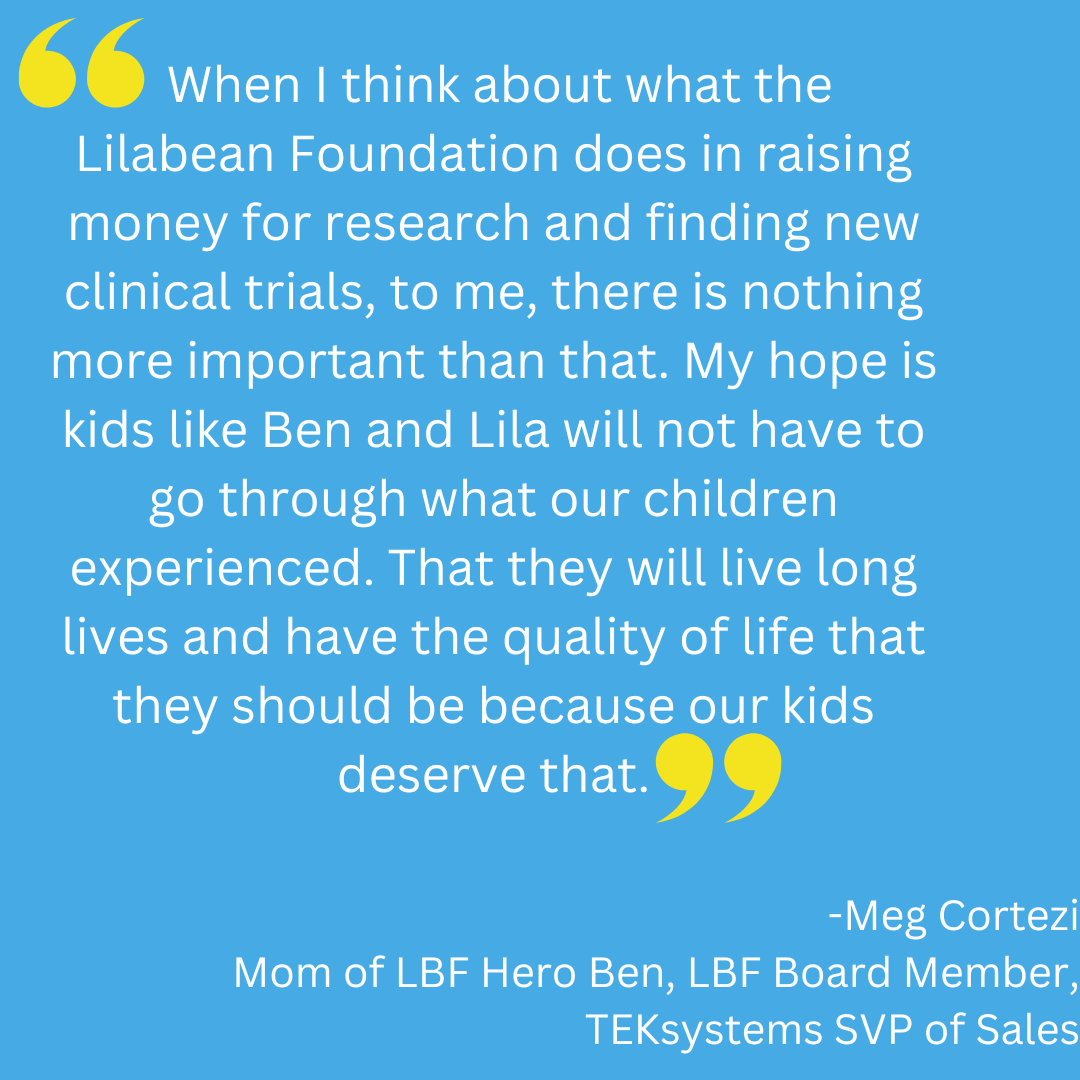
TEK Systems quote at AWS Summit in white text and light blue background

In 2019, Meg became an LBF board member. Soon thereafter, TEKsystems began partnering with LBF more frequently and intentionally. Since 2020, TEKsystems has supported our mission and has acted compassionately towards the objectives of our foundation. TEKsystems has played an important role in raising awareness about the severity of childhood brain cancer and the dire need for private funding. For instance, most people don’t know that approximately 11 children are diagnosed with a malignant brain tumor every day in the United States.

TEKsystems’ support is helping to educate communities on these alarming statistics. And even though brain cancer is the deadliest form of cancer in children, the pediatric brain cancer landscape is grossly underfunded. TEKsystems continues to help LBF fill the federal funding gap with private support for institutions, including the Brain Tumor Institute at Children’s National Hospital, where Lila and Ben remain patients. The relationship between TEKsystems and LBF is an excellent example of the impact that is possible when partnerships are prioritized. 


Ben and Lila are two of many LBF HEROES. Their stories inspire. Meg’s willingness to share her family’s story has paved the way for LBF to connect with other families including TEKsystems’ colleague, Tim Brown, whose daughter Abby also suffers from low grade glioma brain cancer.

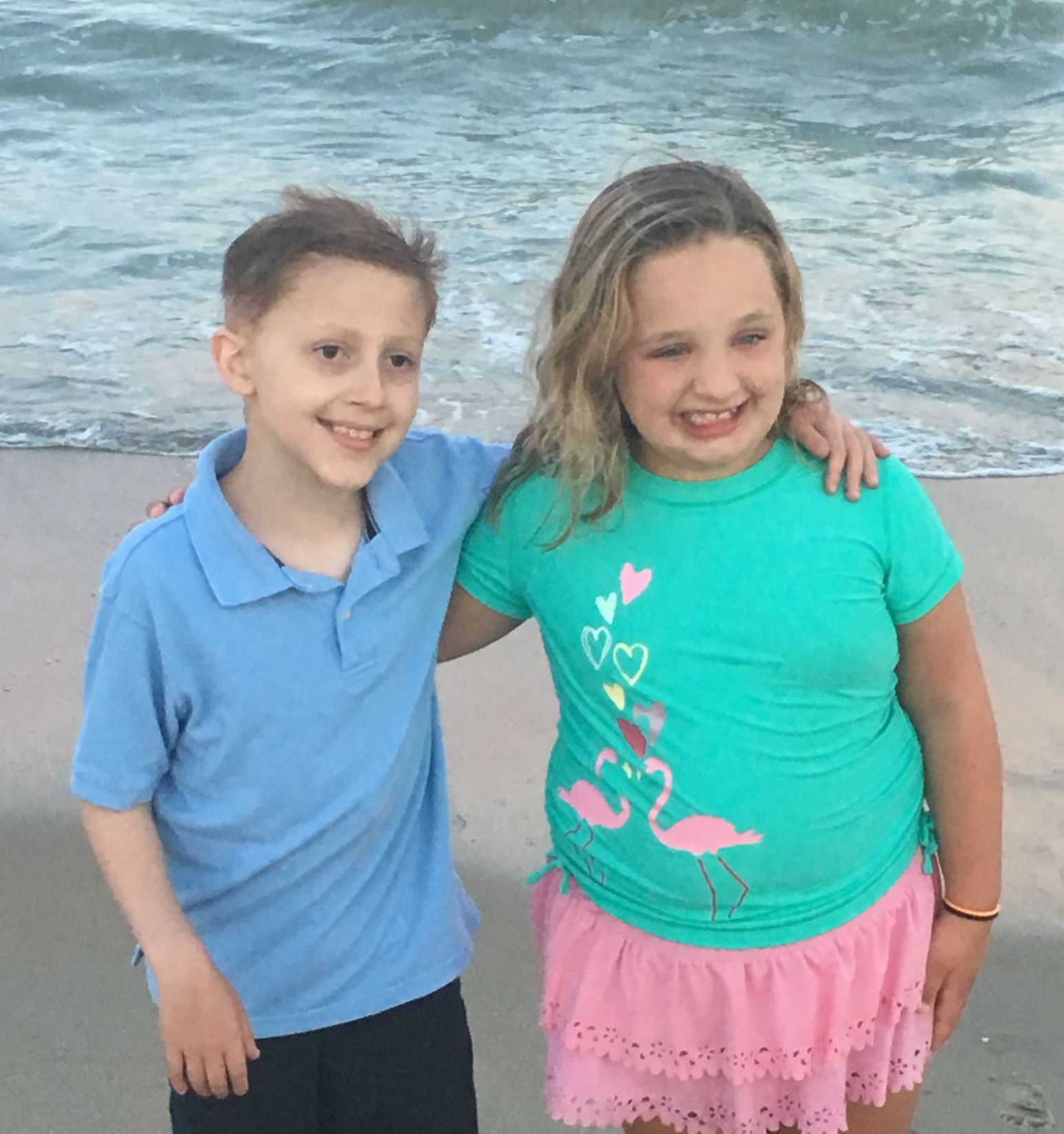
The Lilabean Foundation Heores Lila and Ben

At our 30 year high school reunion, Meg hosted a cocktail party for our NDP classmates to learn more about LBF. It was powerful to connect with old friends and share our stories of heartbreak and resilience.


It is surreal to think that Ben and Lila are now the same ages that Meg and I were when we first met. I am so grateful for Meg’s friendship and commitment to the Lilabean Foundation. Our partnership with TEKsystems is a testament to the power of turning suffering into hopeful action.


May is brain cancer awareness month and we hope that you will consider becoming an 11for11 member in honor of those approximately 11 children who are diagnosed with brain cancer each day. Please join us in our mission to give hope to children and families suffering from this terrible disease.

Two laboratory researchers work inside a biosafety cabinet, examining samples through a microscope w
January 29, 2026
For families facing a pediatric brain tumor diagnosis, one thing quickly becomes clear: care, information, and expertise are often spread across many hospitals and systems. While clinicians and researchers work tirelessly, the data that could help connect the dots is often fragmented, sealed in different formats, institutions, and silos. A newly announced national initiative, PCX (Pediatric Care eXpansion), aims to change that. Backed by up to $50 million in milestone-based funding from the Advanced Research Projects Agency for Health (ARPA-H), PCX is designed to dramatically improve how pediatric health data is shared, starting with pediatric brain tumors. Why This Matters to Our Community At the Lilabean Foundation, we believe progress happens when science and community come together. PCX represents a meaningful step toward a future where no child’s story is broken by fragmented data and where every child benefits from what we learn together. Why Data Sharing Matters So Much Today, a child’s clinical information, like doctor notes, scans, and treatment details, often lives separately from research data, and research data has not historically supported clinical data. Moving information from one place to another has historically required people to manually copy and paste data… a slow, expensive process that makes it nearly impossible to scale nationally. Even when hospitals agree to share data, it can be cumbersome to access and integrate. When care happens across multiple institutions, something that is common in pediatric brain cancer, the patient's clinical data becomes fragmented, making it challenging for researchers to see the full picture of a child's clinical journey. PCX is designed to address this challenge by creating a space between clinical care and research, where clinicians can view patient information in the context of prior patients, research cohorts, and real-world outcomes to support decision-making. At the same time, this information contributes to broader, governed research datasets, strengthening their completeness and accuracy for discovery and learning at scale. The Role of CBTN and the RADIANT Platform This initiative builds on years of groundwork laid by the Children’s Brain Tumor Network (CBTN) , a global collaboration that has already shown what’s possible when institutions share data and samples responsibly. At the heart of PCX is RADIANT , a secure data platform developed through CBTN. RADIANT is being trained to use artificial intelligence (AI) to do something incredibly important and incredibly practical: Read unstructured clinical notes (like PDFs or free-text reports) Translate them into structured, searchable data Reduce the need for manual data entry at participating sites Allow insights from research to eventually inform clinical care Why Pediatric Brain Tumors Were Chosen First There were two major reasons pediatric brain tumors were an ideal starting point for testing this model. First, pediatric brain tumors are among the most complex diseases to study. If a system can work here, where data comes from many sources, types, and institutions, it can work for many other pediatric conditions, too. Second, the groundwork for this moment was laid years ago, including through early philanthropic investments. The Lilabean Foundation helped make this possible by supporting CBTN’s “Project Accelerate,” a multi-year effort to expand the network’s capacity to process and use large volumes of brain tumor data. As part of that commitment, LBF funded over $650,000 to hire data engineers and bioinformaticians and help build out CBTN’s data infrastructure, enabling the consortium to handle more complex data and accelerate discoveries in our first multi-year gift back in 2021, and has continued to build on this commitment by donating to continued efforts to build a solid infrastructure at CBTN. Critically, Project Accelerate also enabled the generation of robust molecular data for patient samples that had not previously been accessible to researchers. This retrospective molecular data now provides essential context for ongoing and future research and becomes even more valuable as new patients receive clinical sequencing, allowing comparisons across time, cohorts, and treatment approaches. That investment, along with additional support from the Lilabean Foundation and other philanthropic partners, strengthened data standards, broke down silos, and expanded CBTN’s ability to create usable, research-ready datasets, making the network better prepared to pursue ambitious national initiatives like PCX. These capabilities—deep molecular data, strong data standards, and durable infrastructure—are foundational to RADIANT’s ability to connect clinical care data with research context in meaningful ways. Today, CBTN, once a consortium of just a few institutions, is a global network with trusted partnerships, shared standards, and a collaborative culture that makes scalable data sharing possible. As leaders involved in the PCX initiative put it plainly: “This could not have happened if CBTN wasn’t prepared with established infrastructure and resources.” That readiness didn’t happen overnight. It reflects years of scientific progress and thoughtful investment from partners like the Lilabean Foundation.
Kelly Barch headshot
December 1, 2025
The Lilabean F oundation (LBF) is thrilled to announce the appointment of Kelly Barch as our new Executive Director. Kelly will work closely with our Founder and President, Nicole Giroux , to advance the mission of the Lilabean Foundation and deepen our impact for children and families affected by pediatric brain cancer. Kelly is a mission-driven leader with more than 20 years of experience building programs, strengthening teams, and driving meaningful change across organizations. She spent 16 years at the National Cancer Institute, where she led enterprise-wide recognition programs, executive recruitment efforts, high-profile events, and cross-functional workforce initiatives. In addition to her public service, Kelly is the co-owner of Clotacin, a family-owned wellness company providing high-quality nutritional support to individuals affected by blood disorders. She oversaw operations, customer experience, and brand development, helping expand the company’s reach and impact. A lifelong Washingtonian, Kelly lives in Kensington with her husband, Justin, their children, Taylor and Beau, and their dog, Boudreaux. Outside of work, she loves staying active with her family and cheering on her alma mater, the LSU Tigers. When asked what excites her most about this new chapter, Kelly shared: “I am honored to step into the role of Executive Director and excited to bring my passion for service to the Lilabean Foundation. The opportunity to fund critical pediatric brain cancer research and help raise awareness means so much to me, and I am truly grateful to be part of this mission.” Please join us in warmly welcoming Kelly to the Lilabean Foundation. We look forward to the leadership, energy, and heart she will bring to this work!
SHOW MORE