The Race That Matters Most: One Teacher, 50 States, and a Student She’ll Never Forget

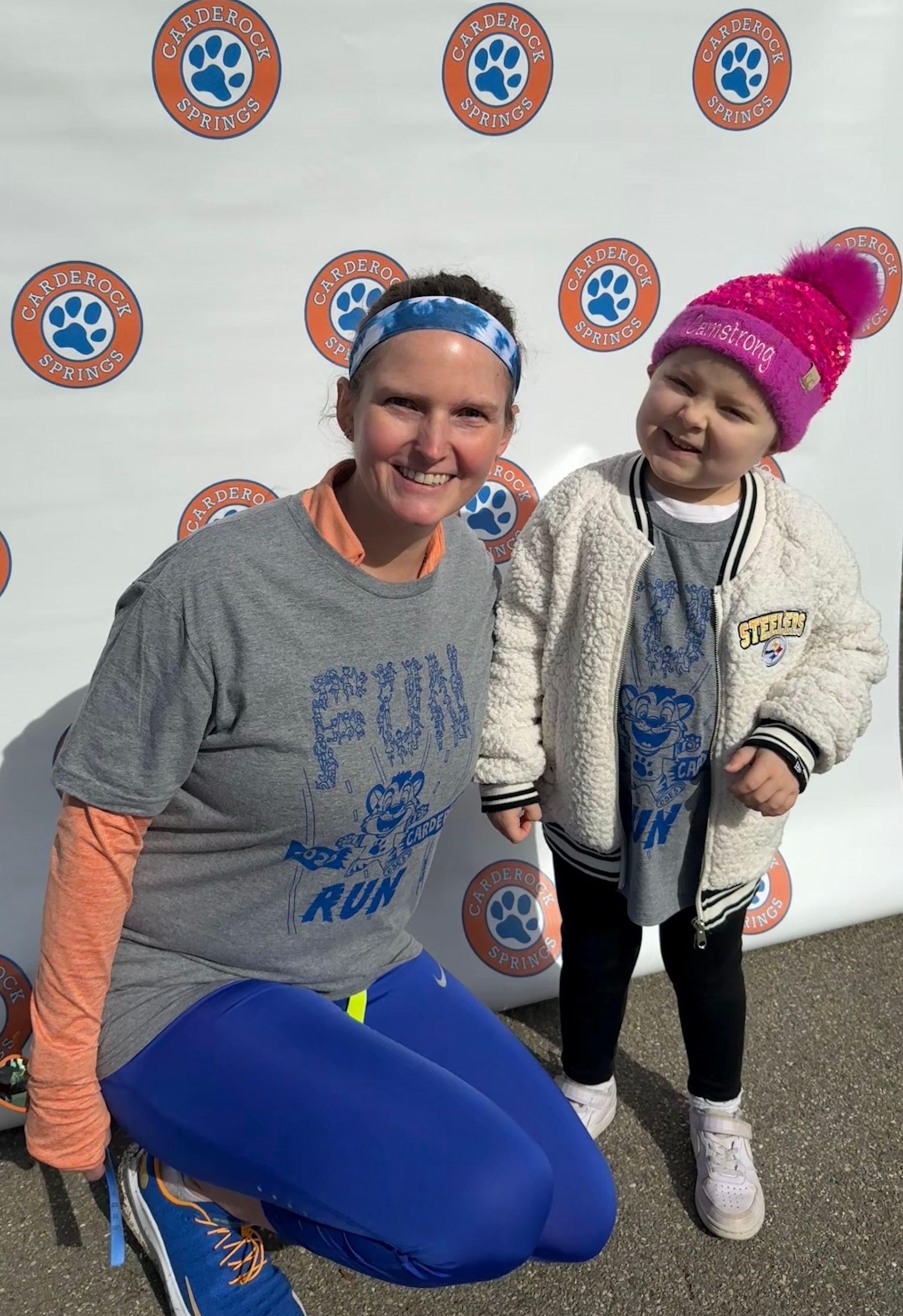
When Justine Carr laces up her running shoes and crosses the finish line of the Bend Half Marathon this spring, she'll be carrying more than miles in her legs. She'll be carrying the memory of a little girl who danced, told jokes, asked questions, and showed up every single day with a smile that could fill a room.


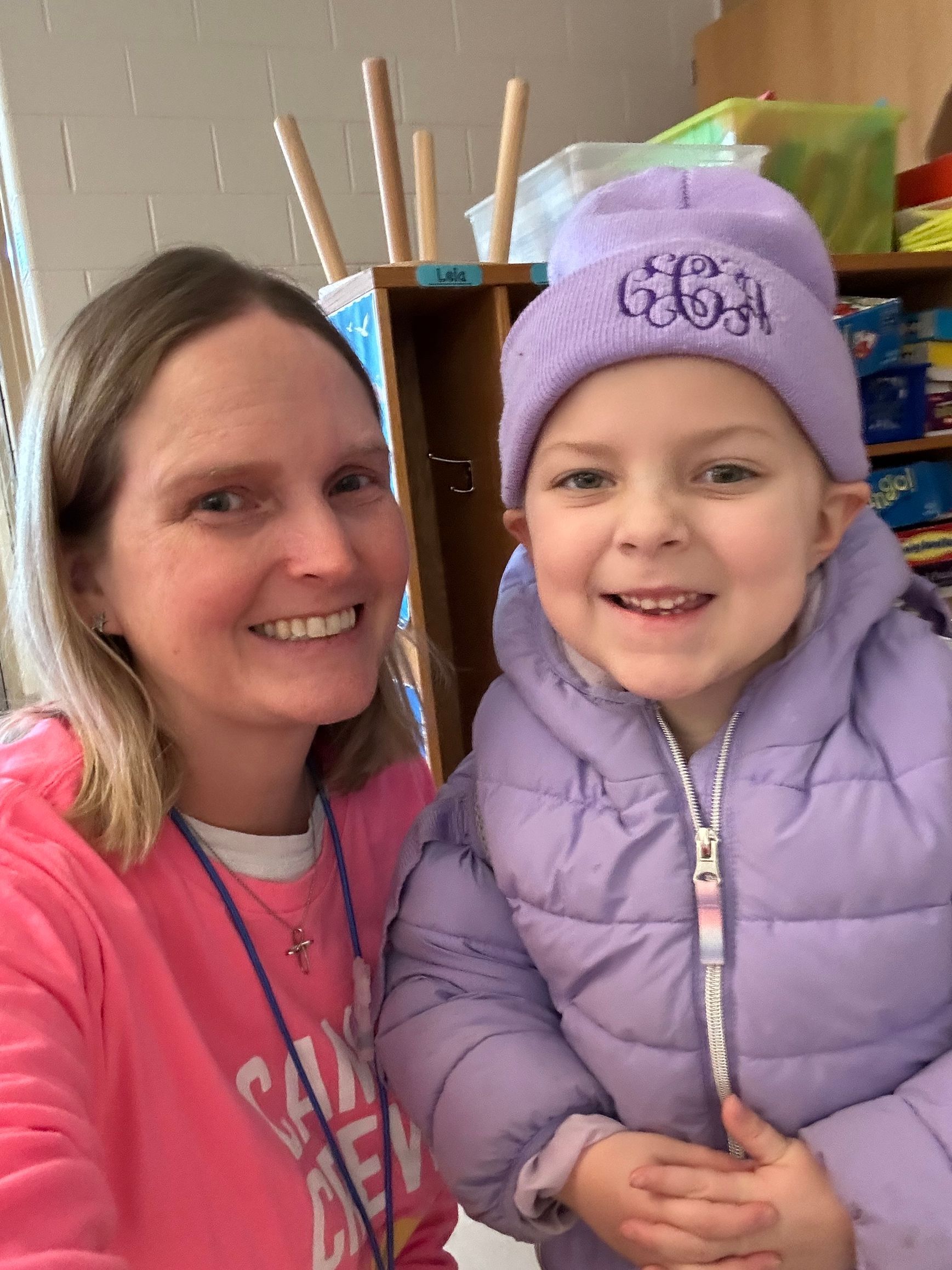
Cameron Corno was Justine's kindergarten student and one of the bravest people Justine has ever known. Cameron passed away on June 6, 2025, after a five-year battle with ependymoma, an aggressive pediatric brain cancer. She was six years old. But in the years since Justine first set her goal to run a race in all 50 states, Cameron's spirit has quietly shaped that mission into something far greater than a personal achievement.


Bend, Oregon, will be state #47. And Justine is running it — as she has before — for Cam.

A Kindergartner Like No Other


Ask Justine what Cameron was like, and she doesn't reach for the story of a sick child. She reaches for the story of a kid.


“She loved to dance, giggle, and read stories. She loved playing with her friends and telling you about her day. She asked questions and was excited to learn new things. She loved spirit days and telling jokes. She was kind to friends who were having a hard day and loved to be a leader. She really loved being a Carderock Cub!”


In her years as a kindergarten teacher, Justine has welcomed hundreds of students. She describes Cameron's class — her 18th kindergarten class — as the most empathetic, understanding, and caring group she has ever had the privilege to teach. Many of the children had grown up alongside Cameron and loved her simply as their friend Cam.


“They helped Cameron when she needed it, without ever making her feel differently for needing it. They never asked why she didn’t have to do something they did or got to do something they didn’t. While a couple might have been just a little jealous that she got to meet the CAPS, she was just their friend Cam. Her impact on them was undeniable. I know that is something they will carry with them always!”


On days when Cameron needed to rest instead of going to recess, the two would stay inside together — just talking, telling stories, reading books.


“This special time will always stay with me,” she says.


The Goal That Started with a Girls on the Run Season


Justine's 50-state running goal didn't start with a bucket list. It started in a circle of young girls, with a clipboard and a coaching whistle.


Justine has been a Girls on the Run coach for 25 seasons — a program that teaches young girls to build confidence, resilience, and community through running. Years ago, she was leading a goal-setting activity at the start of a new season. After a couple of seasons sharing basically the same personal goals, she decided it was time to dream bigger.


“I decided to make a couple of big goals that would go beyond the season,” she explains. “The first was to run a race in every state, and the second was to keep coaching for Girls on the Run at least until I reach that first goal. I thought it would be a good way to show my students that some things are really tough, but we can tackle anything with persistence and heart.”


It was a lesson she was determined to model, not just teach. And somewhere along the way, that goal of 50 races through 50 states became woven together with something — and someone — much more meaningful.

Running for Something Bigger


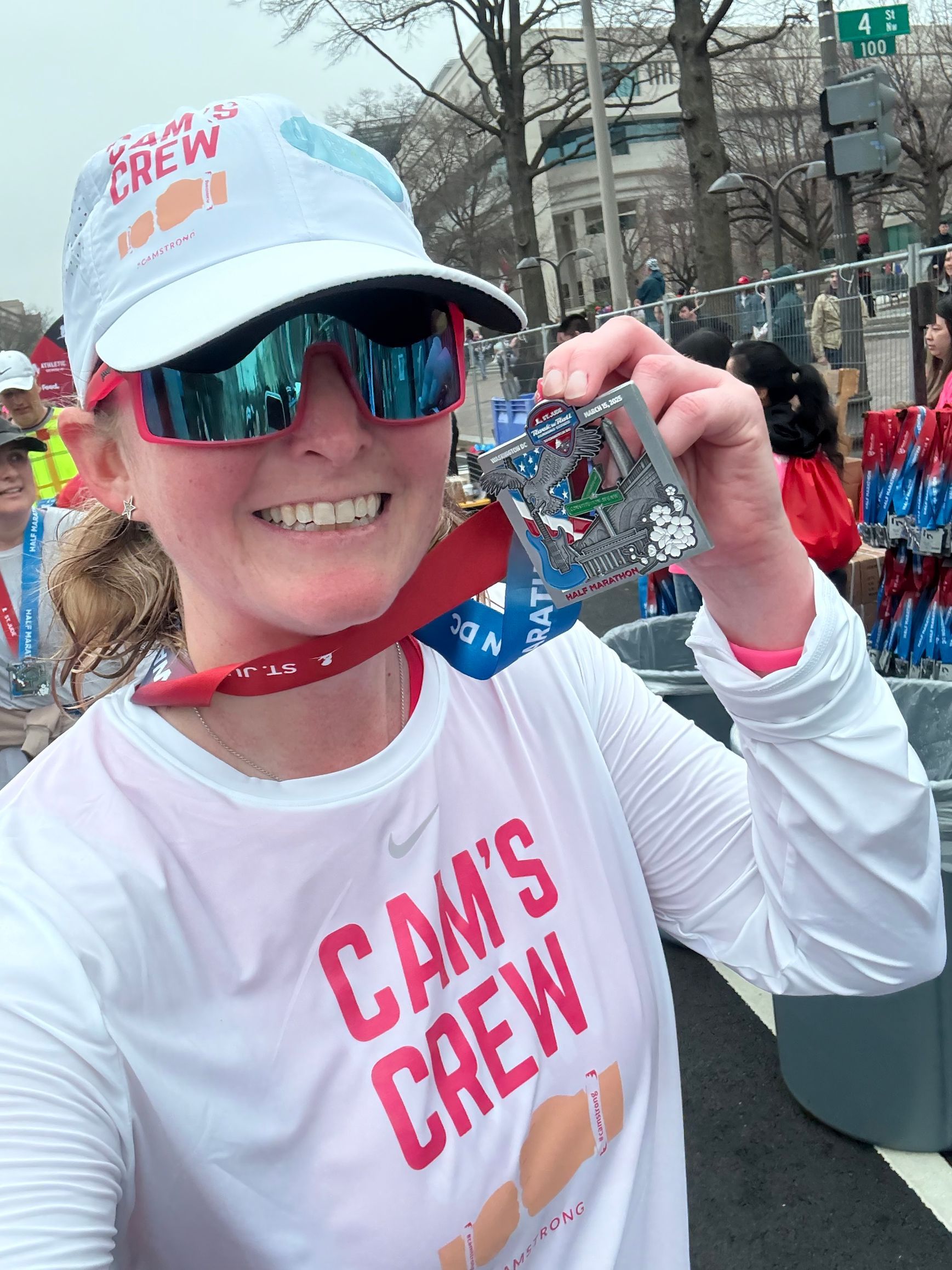
This spring's Bend Half Marathon will be Justine's second race dedicated to raising funds for the Lilabean Foundation in Cameron's honor. When she crosses that finish line in Oregon, she'll be just three states away from completing a decade-long dream. The excitement is real — but so is the weight of why it matters.


“Honestly, I never feel like I am doing enough!” she says. “I love getting ready for a race and planning my visit to a new place, but trying to raise money for an organization like the Lilabean Foundation that does so many amazing things makes it all that much more meaningful. When I think of Cameron and all of the other LBF Heroes, I can’t help but be motivated to continue and do whatever I can to help raise funds and awareness.”


And the community has answered. When Justine runs wearing her Cam's Crew shirt, strangers along the course don't just cheer for her — they cheer for Cameron.


“When I am running a race, and someone sees my shirt and yells out ‘way to go Cam’s Crew’ I get a burst of energy and love!”


That’s what Cameron does. She brings people together — even people who never met her, cheering her name in the streets of cities she never visited.


The Shoes, the Playlist, and the Pink Sunrise


Distance running is an exercise in solitude. Miles of pavement, just your body and your thoughts. For Justine, who laughs and calls herself "very slow," those long stretches of training time have become something sacred.


She listens to Cameron's playlist. She thinks of her when she runs beneath a beautiful sunrise. And during races, she carries Cameron's smile and laugh with her as both fuel and joy.


But perhaps nothing captures the depth of that bond more than a pair of running shoes.


When Justine first ran for Cameron to raise money for the Lilabean Foundation, she got a special pair of running shoes — ones with plenty of pink on them. She asked Cameron to sign them. Cameron did, adding a little heart. She laughed at the request, probably thinking it was a funny thing for her teacher to ask. But those shoes now hold a place of honor in Justine's collection. She wears them whenever she needs extra strength.


"That’s what carrying Cameron’s memory does,” Justine says simply. It gives strength.


Cameron's story has also shifted the way Justine thinks about fundraising itself. Asking people for money can feel uncomfortable. But when the ask is rooted in someone so real, so vivid, so loved — it becomes something different entirely.


“Cameron touched so many people with her strength, bravery, and smile,” Justine reflects. “It can be hard to ask people for money, but when it’s for something and someone so important, it doesn’t feel so hard anymore. I am so grateful to all the friends, family, teachers, Cam’s Crew, and total strangers who have given in hope of making a difference for children bravely fighting pediatric brain cancers.”


Turn Your Passion Into a Fundraiser


Justine's story is a powerful reminder that fundraising doesn't require a gala or a corporate sponsor. It starts with something you already love — a race, a hobby, an annual tradition — and a cause you believe in.


When asked what she'd say to someone thinking about doing the same, Justine doesn't hesitate:


“Do it! Why not? Taking something, you are passionate about, like a race or hobby, and putting it to a great cause can only make it more meaningful. It is a great way to keep important people close to our hearts and shows the irreplaceable value of organizations like the Lilabean Foundation. Nothing we do will probably ever be as hard as the things Cameron and the other LBF Heroes go through. Dedicating our energy to fundraising for them will hopefully eventually result in big advancements in pediatric brain cancer research and treatments.”


The Lilabean Foundation makes it easy to create your own fundraising page and dedicate it to an LBF Hero or in memory of someone you love. Whether you’re running a marathon, hosting a birthday fundraiser, or organizing a community event, you can turn that moment into meaningful impact for children battling brain cancer.


Ready to start your own fundraiser? Visit the LBF Community Fundraising page to create your personalized fundraising page and join the growing community of supporters who are turning their passions into purpose.


CamStrong Forever


When asked what she would want Cameron to know if she could see all of this — the miles, the medals, the fundraising pages, the strangers cheering in the streets — Justine's answer is clear and immediate.


“I would want her to know that we all still carry her with us. That Cam’s Crew is enormous, and we think about her and hold her in our hearts all the time. I would want her to know that we are doing our best to raise funding to help those who come after her. And that we are doing our best to stay #CAMstrong forever!”


You can support Justine’s fundraising efforts by donating here. All donations will be directed toward the Cameron Corno Fund for Ependymoma Research.
Text reading
March 31, 2026
This Women's History Month, the Lilabean Foundation honors the extraordinary women who surround children fighting brain cancer — from researchers driving collaboration to friends who simply refuse to let go. Every March, the world pauses to honor the women who have shaped history — the pioneers, the trailblazers, the voices that refused to be silenced. But some of the most extraordinary women doing the most extraordinary work don't make headlines. They make meals. They make calls. They make sure that a mother caring for her sick child has someone to talk to. Behind every child fighting for their life is a remarkable network of women — researchers who build bridges between science and hope, and friends who simply refuse to let go. Their work looks different. Their titles are different. But the thread connecting them is the same: an unwillingness to accept the status quo, and an insistence on showing up. This Women's History Month, the Lilabean Foundation is honored to highlight two of those women. Gerri Trooskin, Director of Partnerships at the Children's Brain Tumor Network, who works every day to ensure that no child's experience is lost and that the science of healing moves faster because people choose to collaborate rather than compete. And Alexandra Byrnes, LBF Board Member and close friend of Stewi Corno, mother to LBF Hero Cameron Corno, who knows firsthand what it means to show up when the stakes could not be higher. Together, their stories paint a portrait of what it looks like when women lead with purpose.
Two laboratory researchers work inside a biosafety cabinet, examining samples through a microscope w
January 29, 2026
For families facing a pediatric brain tumor diagnosis, one thing quickly becomes clear: care, information, and expertise are often spread across many hospitals and systems. While clinicians and researchers work tirelessly, the data that could help connect the dots is often fragmented, sealed in different formats, institutions, and silos. A newly announced national initiative, PCX (Pediatric Care eXpansion), aims to change that. Backed by up to $50 million in milestone-based funding from the Advanced Research Projects Agency for Health (ARPA-H), PCX is designed to dramatically improve how pediatric health data is shared, starting with pediatric brain tumors. Why This Matters to Our Community At the Lilabean Foundation, we believe progress happens when science and community come together. PCX represents a meaningful step toward a future where no child’s story is broken by fragmented data and where every child benefits from what we learn together. Why Data Sharing Matters So Much Today, a child’s clinical information, like doctor notes, scans, and treatment details, often lives separately from research data, and research data has not historically supported clinical data. Moving information from one place to another has historically required people to manually copy and paste data… a slow, expensive process that makes it nearly impossible to scale nationally. Even when hospitals agree to share data, it can be cumbersome to access and integrate. When care happens across multiple institutions, something that is common in pediatric brain cancer, the patient's clinical data becomes fragmented, making it challenging for researchers to see the full picture of a child's clinical journey. PCX is designed to address this challenge by creating a space between clinical care and research, where clinicians can view patient information in the context of prior patients, research cohorts, and real-world outcomes to support decision-making. At the same time, this information contributes to broader, governed research datasets, strengthening their completeness and accuracy for discovery and learning at scale. The Role of CBTN and the RADIANT Platform This initiative builds on years of groundwork laid by the Children’s Brain Tumor Network (CBTN) , a global collaboration that has already shown what’s possible when institutions share data and samples responsibly. At the heart of PCX is RADIANT , a secure data platform developed through CBTN. RADIANT is being trained to use artificial intelligence (AI) to do something incredibly important and incredibly practical: Read unstructured clinical notes (like PDFs or free-text reports) Translate them into structured, searchable data Reduce the need for manual data entry at participating sites Allow insights from research to eventually inform clinical care Why Pediatric Brain Tumors Were Chosen First There were two major reasons pediatric brain tumors were an ideal starting point for testing this model. First, pediatric brain tumors are among the most complex diseases to study. If a system can work here, where data comes from many sources, types, and institutions, it can work for many other pediatric conditions, too. Second, the groundwork for this moment was laid years ago, including through early philanthropic investments. The Lilabean Foundation helped make this possible by supporting CBTN’s “Project Accelerate,” a multi-year effort to expand the network’s capacity to process and use large volumes of brain tumor data. As part of that commitment, LBF funded over $650,000 to hire data engineers and bioinformaticians and help build out CBTN’s data infrastructure, enabling the consortium to handle more complex data and accelerate discoveries in our first multi-year gift back in 2021, and has continued to build on this commitment by donating to continued efforts to build a solid infrastructure at CBTN. Critically, Project Accelerate also enabled the generation of robust molecular data for patient samples that had not previously been accessible to researchers. This retrospective molecular data now provides essential context for ongoing and future research and becomes even more valuable as new patients receive clinical sequencing, allowing comparisons across time, cohorts, and treatment approaches. That investment, along with additional support from the Lilabean Foundation and other philanthropic partners, strengthened data standards, broke down silos, and expanded CBTN’s ability to create usable, research-ready datasets, making the network better prepared to pursue ambitious national initiatives like PCX. These capabilities—deep molecular data, strong data standards, and durable infrastructure—are foundational to RADIANT’s ability to connect clinical care data with research context in meaningful ways. Today, CBTN, once a consortium of just a few institutions, is a global network with trusted partnerships, shared standards, and a collaborative culture that makes scalable data sharing possible. As leaders involved in the PCX initiative put it plainly: “This could not have happened if CBTN wasn’t prepared with established infrastructure and resources.” That readiness didn’t happen overnight. It reflects years of scientific progress and thoughtful investment from partners like the Lilabean Foundation.
SHOW MORE