A Field Trip to See a Piece of My Daughter
Written by Stewi Corno
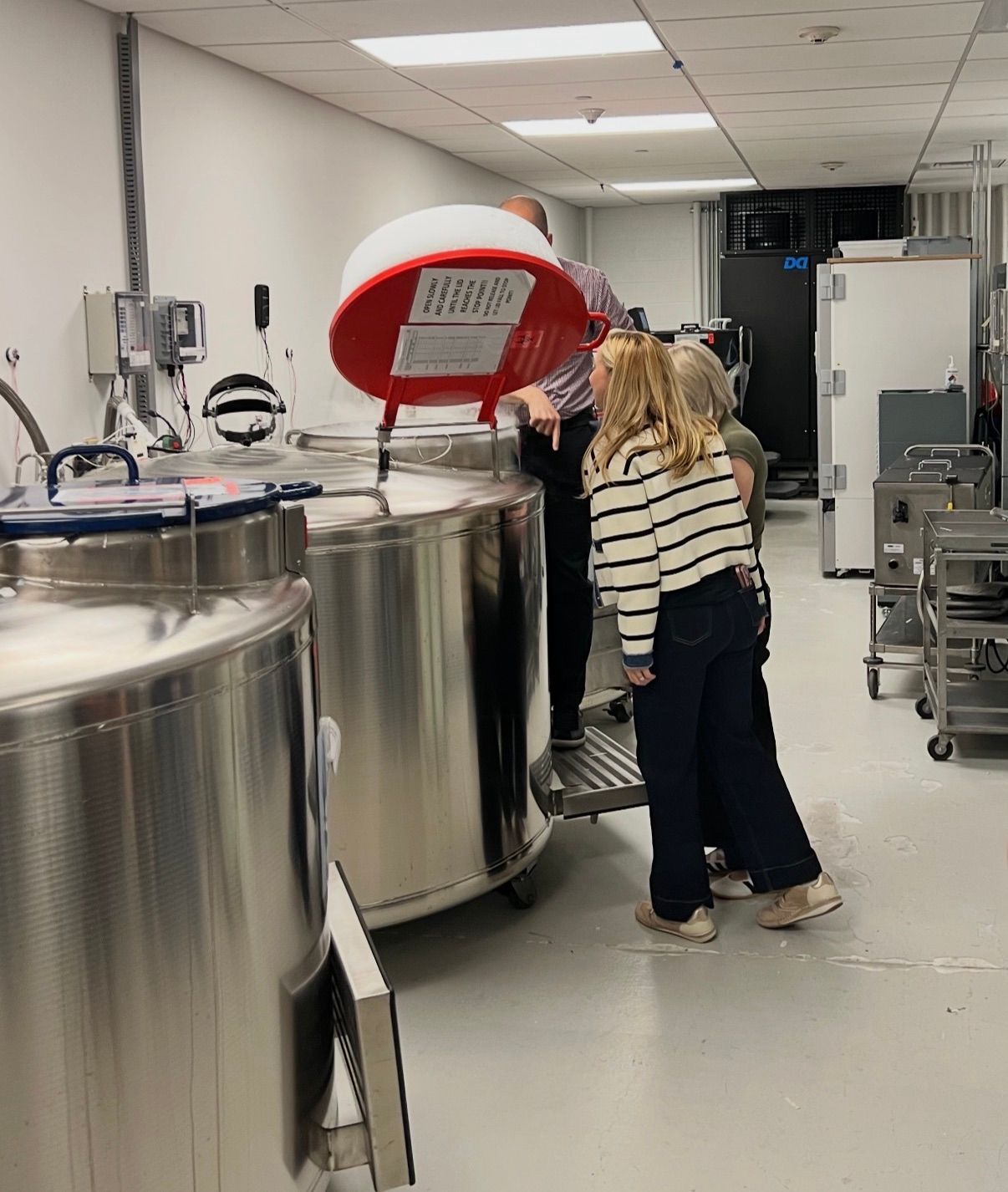
Recently, members of the Lilabean Foundation team had the opportunity to visit Children’s Hospital of Philadelphia (CHOP) and spend time with researchers and leaders from the Children’s Brain Tumor Network (CBTN).
We left feeling something we do not always get to feel in pediatric brain cancer research: real momentum.
Not because the work is finished — far from it — but because for the first time, it truly feels like research is happening at a different speed than even a few years ago.
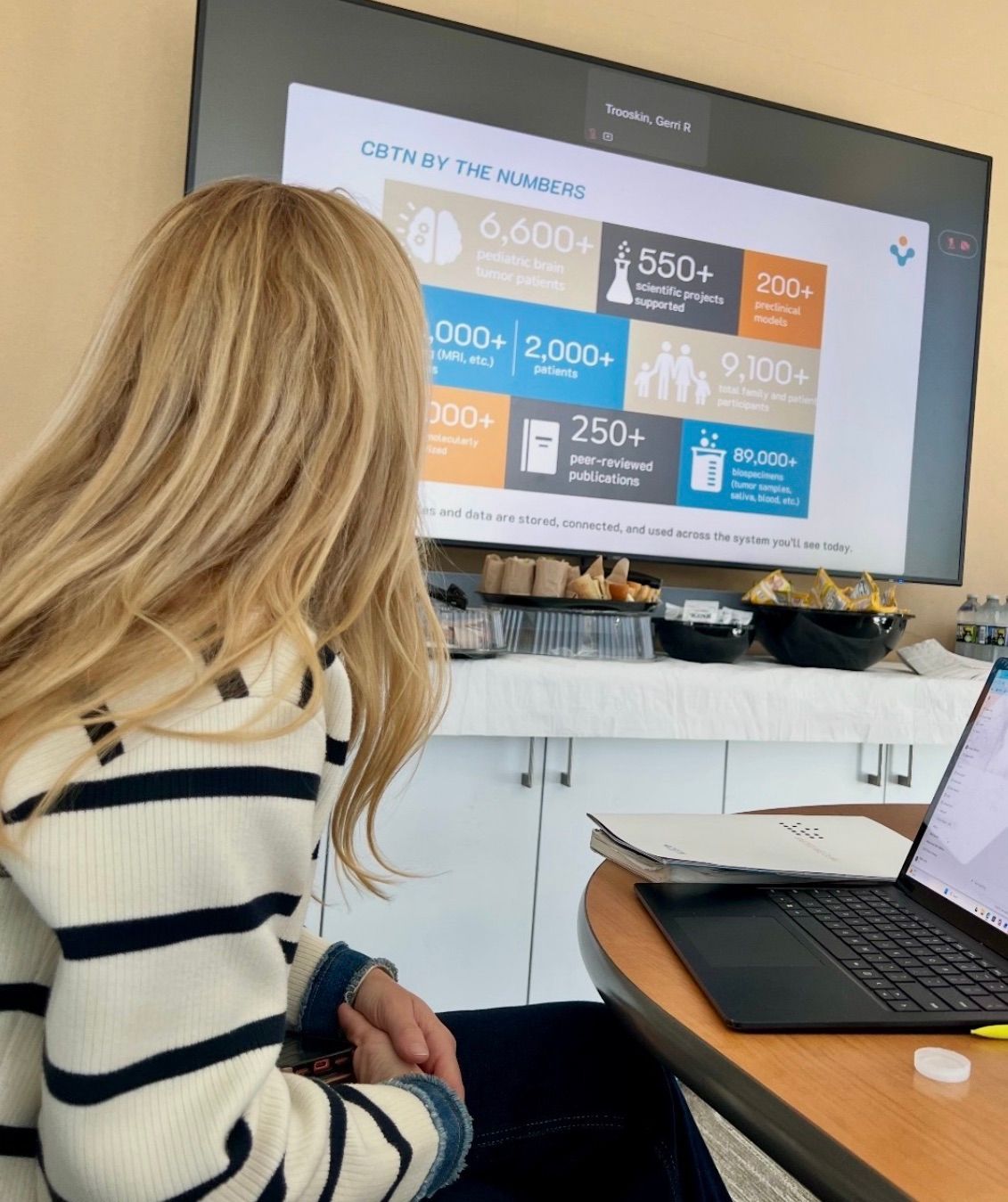
CBTN is no longer just a small collaboration between a handful of hospitals. Today, it connects more than 35 institutions, 6,600+ children, nearly 89,000 tumor samples, and hundreds of active research projects.
Every donated sample becomes part of something much bigger — helping researchers ask better questions, move faster, accelerate discovery, and continue learning long after a child’s treatment journey begins
And for families like ours, research was never abstract. It shaped conversations with doctors, opened doors to clinical trials, and gave us something to hold onto when we needed it most.
Families are still sitting in hospital rooms right now trying to understand scans, tumor genetics, clinical trials, and what comes next.
That’s why seeing this work up close felt so powerful.
One of the most incredible things we learned during our visit was how quickly tumors can now be analyzed using advanced sequencing approaches. In some cases, doctors are able to identify tumor types during or immediately after surgery, allowing families to get answers faster and treatment decisions to begin sooner.
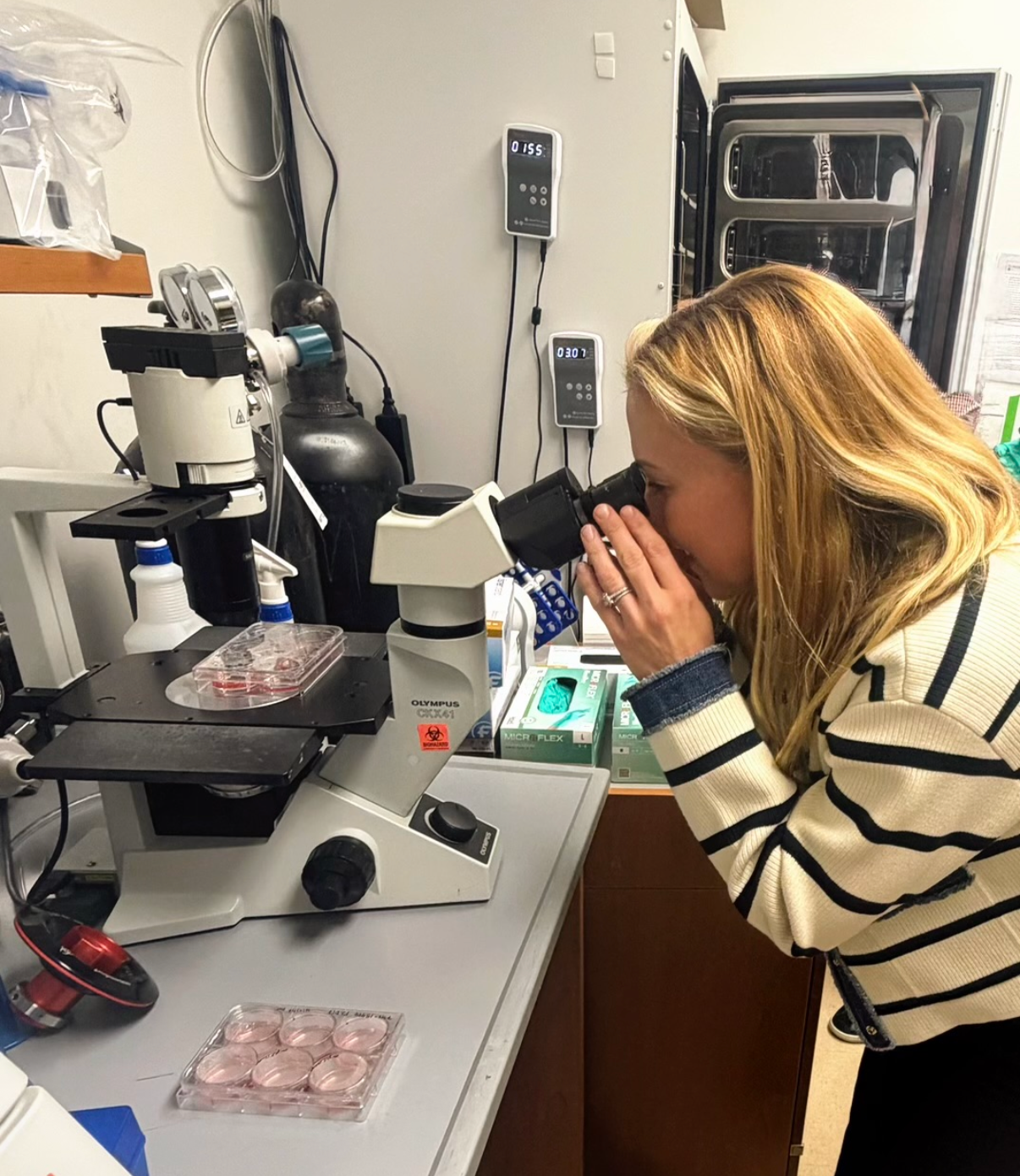
We also saw researchers growing “tumoroids” — living models created from a child’s tumor cells in approximately two weeks.
These models allow researchers to begin testing therapies against a child’s actual tumor while that child is still actively in treatment, helping accelerate discovery while also building knowledge that may help future children facing similar diagnoses.
Every child’s contribution helps researchers learn something that may help the next child.
Families are no longer just participants in research. Through advocacy, clinical trial participation, tissue donation, and data sharing, they are helping accelerate discovery and connect researchers in ways that simply did not exist a few years ago.
But the biggest shift we heard throughout the day was this:
Research is no longer happening years behind patient care.
It is happening alongside treatment.
That progress is incredibly hopeful.
And the urgency remains just as real.
Dr. Jay Storm — Cameron’s neurosurgeon and CBTN Scientific Director — said something during our visit that has stayed with me ever since:
“We can classify tumors far better than we can act on them.”
Researchers can now understand pediatric brain tumors faster and more precisely than ever before. But there are still not enough effective treatments for children, and discoveries still need to move faster from the lab to the bedside.
That is exactly why organizations like the Lilabean Foundation exist.
Federal funding helps scale research.
Philanthropy is often what helps start it — and keep it moving between breakthroughs.
Without sustained funding, progress slows.
With it, progress accelerates.
There was also something deeply personal about this visit.
At one point during the tour, a researcher said something to me I will never forget:
“Knowing part of Cameron still physically lives here.”
Standing inside those labs knowing Cameron is now part of this system — that her tumor is still teaching, still contributing, and still helping researchers learn — is difficult to fully put into words.
There is something profoundly meaningful about knowing part of her is still fighting alongside the researchers, doctors, and families working toward better outcomes for children with brain cancer.
This is what progress looks like.
Not one miracle overnight.
But one meaningful step after another.
A sample that powers future discovery.
A model that helps test a therapy.
A clinical trial that opens a new door.
A researcher who can keep going because the funding is there.
If I had to summarize the day in one sentence, it would be this:
We are no longer waiting years for answers.
Now the race is turning those answers into treatments fast enough to save kids.
That is why sustained support matters so much.
Through programs like LBF365, monthly donors help provide the ongoing funding needed to keep research moving every single day of the year.
Because children fighting brain cancer do so 365 days a year, 24 hours a day — and they do not have time to wait.