A Conversation with LBF Scientific Advisor, Jessica Foster

In 2023, the Lilabean Foundation experienced significant growth, expanding from one Scientific Advisor to a Council of three esteemed professionals. We were thrilled to welcome Dr. Jessica Foster and Dr. Mateusz Koptyra, alongside Dr. Brian Rood, as members of this esteemed advisory group.

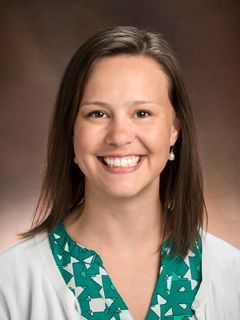
Dr. Jessica Foster profile picture

Today, we have the pleasure of introducing Dr. Jessica Foster through an engaging Q&A session. Dr. Foster is a distinguished clinician and researcher, dedicating her expertise to both patient care and groundbreaking research endeavors. With over a decade of experience at the Children’s Hospital of Philadelphia, her focus lies in pediatric brain and spinal cord tumors. Driven by a passion for improving outcomes, she and her team are pioneering innovative approaches, including leveraging the immune system to combat these challenging cancers.


Join us as we delve into Dr. Foster's journey, her pioneering work, and the profound motivation behind her dedication.


Q: What led you to specialize in pediatric brain cancer research & treatment?


Dr. Foster: I was intrigued by both the brain and cancer from an early age, starting in high school. My major in college was neuroscience, and it was during college I decided to pursue a career in medicine, and I was already drawn to pediatric oncology. This interest never waivered during my residency, and I ultimately chose the Children’s Hospital of Philadelphia (CHOP) for my fellowship training so I could learn more about the cutting-edge CAR T cell technology. Once I arrived at CHOP I finally put all my passions together, focusing on pediatric neuro-oncology and researching novel immune-based therapies, specifically focusing on CAR T cells for central nervous system tumors.


Q: As both a clinician and a researcher, how do you balance the emotional challenges of working with pediatric patients with the scientific and medical aspects of your job?


Dr. Foster: I am never more motivated to get back into the lab and help find a cure than after my time attending on the inpatient service. Seeing patients directly inspires me to ask more questions and try to find better answers. As a mother myself, taking care of pediatric patients can hit quite hard emotionally. I try to use that as fuel to work harder and push our research forward, faster.


Q: How do you stay hopeful and positive in the face of such a challenging disease?


Dr. Foster: I believe we are on the cusp of dramatically changing the outcomes for patients with CNS tumors. Looking back at pediatric oncology history, the treatment of leukemia changed over the course of a few decades with a deeper understanding of the cancer’s biology and well-run, large-scale, clinical trials. We are now at that point for pediatric CNS tumors where we are truly understanding the biology of all the diverse tumor types and using that knowledge to design thoughtful trials.


Q: How do you incorporate research findings into your clinical practice?


Dr. Foster: I am constantly scouring the literature for new data for all of my patients. For many, there is a standard of care therapy and I will always use that first and foremost. Even our standards of care are constantly changing based on the latest research. For others either without standard of care or who have relapsed, I try to see what biological insights we are gaining for their tumor type, and if there any open trials that seem to target the tumor best. If no trials are available, I will look to see if there are other drugs available either commercially or through expanded access that might help.


Q: What are your hopes for the future of pediatric brain cancer research and treatment?


Dr. Foster: My hope is that I never have to tell a family that we have no options for their tumor. I personally hope that immunotherapy becomes a mainstay of treatment and that we can improve access for all of our novel therapies across the globe.


Q: Outside of work, what are some of your interests and hobbies?


Dr. Foster: My husband, two children, and I love to go skiing in the winter and swimming in the ocean or lake in the summer. I am an avid Phillies fan, so you can find me at Citizens Bank Park quite a bit sporting a Realmuto jersey. I also enjoy traveling and running with friends.
A blue graphic with yellow text reading:
April 3, 2026
When Justine Carr laces up her running shoes and crosses the finish line of the Bend Half Marathon this spring, she'll be carrying more than miles in her legs. She'll be carrying the memory of a little girl who danced, told jokes, asked questions, and showed up every single day with a smile that could fill a room. Cameron Corno was Justine's kindergarten student and one of the bravest people Justine has ever known. Cameron passed away on June 6, 2025, after a five-year battle with ependymoma, an aggressive pediatric brain cancer. She was six years old. But in the years since Justine first set her goal to run a race in all 50 states, Cameron's spirit has quietly shaped that mission into something far greater than a personal achievement. Bend, Oregon, will be state #47. And Justine is running it — as she has before — for Cam.
Text reading
March 31, 2026
This Women's History Month, the Lilabean Foundation honors the extraordinary women who surround children fighting brain cancer — from researchers driving collaboration to friends who simply refuse to let go. Every March, the world pauses to honor the women who have shaped history — the pioneers, the trailblazers, the voices that refused to be silenced. But some of the most extraordinary women doing the most extraordinary work don't make headlines. They make meals. They make calls. They make sure that a mother caring for her sick child has someone to talk to. Behind every child fighting for their life is a remarkable network of women — researchers who build bridges between science and hope, and friends who simply refuse to let go. Their work looks different. Their titles are different. But the thread connecting them is the same: an unwillingness to accept the status quo, and an insistence on showing up. This Women's History Month, the Lilabean Foundation is honored to highlight two of those women. Gerri Trooskin, Director of Partnerships at the Children's Brain Tumor Network, who works every day to ensure that no child's experience is lost and that the science of healing moves faster because people choose to collaborate rather than compete. And Alexandra Byrnes, LBF Board Member and close friend of Stewi Corno, mother to LBF Hero Cameron Corno, who knows firsthand what it means to show up when the stakes could not be higher. Together, their stories paint a portrait of what it looks like when women lead with purpose.
Two laboratory researchers work inside a biosafety cabinet, examining samples through a microscope w
January 29, 2026
For families facing a pediatric brain tumor diagnosis, one thing quickly becomes clear: care, information, and expertise are often spread across many hospitals and systems. While clinicians and researchers work tirelessly, the data that could help connect the dots is often fragmented, sealed in different formats, institutions, and silos. A newly announced national initiative, PCX (Pediatric Care eXpansion), aims to change that. Backed by up to $50 million in milestone-based funding from the Advanced Research Projects Agency for Health (ARPA-H), PCX is designed to dramatically improve how pediatric health data is shared, starting with pediatric brain tumors. Why This Matters to Our Community At the Lilabean Foundation, we believe progress happens when science and community come together. PCX represents a meaningful step toward a future where no child’s story is broken by fragmented data and where every child benefits from what we learn together. Why Data Sharing Matters So Much Today, a child’s clinical information, like doctor notes, scans, and treatment details, often lives separately from research data, and research data has not historically supported clinical data. Moving information from one place to another has historically required people to manually copy and paste data… a slow, expensive process that makes it nearly impossible to scale nationally. Even when hospitals agree to share data, it can be cumbersome to access and integrate. When care happens across multiple institutions, something that is common in pediatric brain cancer, the patient's clinical data becomes fragmented, making it challenging for researchers to see the full picture of a child's clinical journey. PCX is designed to address this challenge by creating a space between clinical care and research, where clinicians can view patient information in the context of prior patients, research cohorts, and real-world outcomes to support decision-making. At the same time, this information contributes to broader, governed research datasets, strengthening their completeness and accuracy for discovery and learning at scale. The Role of CBTN and the RADIANT Platform This initiative builds on years of groundwork laid by the Children’s Brain Tumor Network (CBTN) , a global collaboration that has already shown what’s possible when institutions share data and samples responsibly. At the heart of PCX is RADIANT , a secure data platform developed through CBTN. RADIANT is being trained to use artificial intelligence (AI) to do something incredibly important and incredibly practical: Read unstructured clinical notes (like PDFs or free-text reports) Translate them into structured, searchable data Reduce the need for manual data entry at participating sites Allow insights from research to eventually inform clinical care Why Pediatric Brain Tumors Were Chosen First There were two major reasons pediatric brain tumors were an ideal starting point for testing this model. First, pediatric brain tumors are among the most complex diseases to study. If a system can work here, where data comes from many sources, types, and institutions, it can work for many other pediatric conditions, too. Second, the groundwork for this moment was laid years ago, including through early philanthropic investments. The Lilabean Foundation helped make this possible by supporting CBTN’s “Project Accelerate,” a multi-year effort to expand the network’s capacity to process and use large volumes of brain tumor data. As part of that commitment, LBF funded over $650,000 to hire data engineers and bioinformaticians and help build out CBTN’s data infrastructure, enabling the consortium to handle more complex data and accelerate discoveries in our first multi-year gift back in 2021, and has continued to build on this commitment by donating to continued efforts to build a solid infrastructure at CBTN. Critically, Project Accelerate also enabled the generation of robust molecular data for patient samples that had not previously been accessible to researchers. This retrospective molecular data now provides essential context for ongoing and future research and becomes even more valuable as new patients receive clinical sequencing, allowing comparisons across time, cohorts, and treatment approaches. That investment, along with additional support from the Lilabean Foundation and other philanthropic partners, strengthened data standards, broke down silos, and expanded CBTN’s ability to create usable, research-ready datasets, making the network better prepared to pursue ambitious national initiatives like PCX. These capabilities—deep molecular data, strong data standards, and durable infrastructure—are foundational to RADIANT’s ability to connect clinical care data with research context in meaningful ways. Today, CBTN, once a consortium of just a few institutions, is a global network with trusted partnerships, shared standards, and a collaborative culture that makes scalable data sharing possible. As leaders involved in the PCX initiative put it plainly: “This could not have happened if CBTN wasn’t prepared with established infrastructure and resources.” That readiness didn’t happen overnight. It reflects years of scientific progress and thoughtful investment from partners like the Lilabean Foundation.
SHOW MORE