Resilience, Hope, and Collaboration: Cameron's Inspiring Journey with Childhood Brain Cancer

Picture yourself submerged in tranquil water, weightless and free. With every stroke or paddle, you glide effortlessly, your worries washing away with each ripple. It's a moment of pure freedom.


Now, meet Cameron Corno, a remarkable young girl who has discovered that same sense of liberation in the water. She isn't just swimming; she is finding solace. For Cameron, those moments in the water are when she feels most free and happy as she faces the impact of a brain tumor.


Cameron's journey is a story of courage, resilience, and the power to inspire change. This is the tale of a five-year-old girl who defies the odds every day, with a mission that promises a brighter future for all children.

LBF Hero Cameron

Cameron's Courage

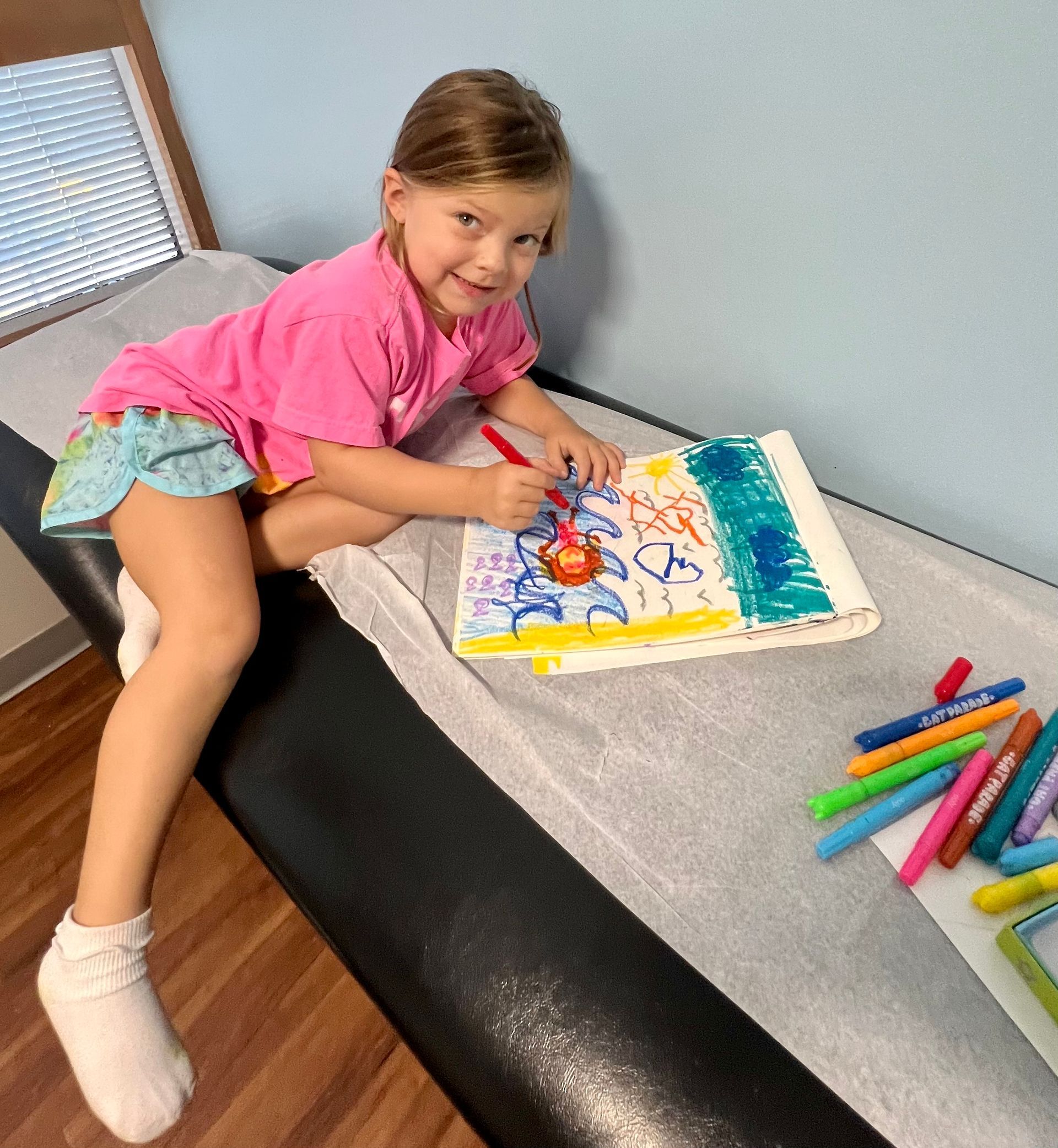
Cameron is a lively five-year-old; a bundle of energy and creativity. Her days are full of laughter, joy, and dreams. She's the kind of child who loves to dance, paint, swim, and play doctor. She's a cherished daughter and a loving big sister, and has a smile that could light up a whole room.


In March 2020, Cameron's life took an abrupt turn. Her parents noticed something amiss with their usually energetic daughter. After an overnight hospital stay and several tests later, the results were life-altering: a tumor was compressing Cameron's brain stem.


Cameron underwent a 14-hour operation, followed by two additional brain surgeries. The Pediatric Intensive Care Unit (PICU) became her temporary home, a place where her parents watched her struggle to relearn the most basic human functions—how to eat, drink, talk, sit, crawl, and walk.


Seven weeks of radiation followed, as did four rounds of intensive chemotherapy. And, in December 2020, due to an inoperable spot on her spine, Cameron began a year-long regimen of oral chemotherapy. 


Through it all, Cameron's spirit remained unbroken. Her love for swimming, the very activity that brought her joy and freedom before her diagnosis, served as a symbol of her resilience. She swam in a sea of uncertainty with remarkable courage, a beacon of hope for her parents in their darkest hours.


Unfortunately, in August 2023, an MRI revealed that Cameron’s cancer had returned. She had yet another major brain surgery and has started a 6-week radiation regimen with the possibility of chemotherapy to follow. The family is fighting to follow Cameron’s example of positivity and perseverance.


Cameron’s diagnosis has ignited a community to come together, yet again, to raise awareness and funds to support research for more effective treatments for children with brain cancer. At five years old, she has a mission: to fight and inspire others to do the same.


The Lilabean Foundation’s Commitment to Cures

For Cameron's parents, every day has been a rollercoaster of emotions. Amid the struggle, the Lilabean Foundation (LBF) emerged as a source of strength—a place that not only recognizes the depth of her family's anguish but also offers unwavering support when they need it most. 


The family, filled with uncertainty and challenges, found a kindred spirit in Nicole Giroux, the founder of LBF. Nicole, a mother herself, knows firsthand the anguish of watching a child challenged by a life-threatening illness. Her daughter, Lila, also has brain cancer, and Nicole has walked the same painful path as Cameron's parents. After learning that brain cancer is the most fatal childhood cancer and that treatment options are severely lacking, the Lilabean Foundation was born in 2011.


Over the past 12 years, LBF has grown, extending its impact to support families like Cameron's around the world. The mission has remained unwavering: to fund ground-breaking research for children battling brain cancer today, while forging critical partnerships with leading-edge organizations to eradicate this disease forever. 


"We're not just a foundation; we're a force for change. The support we receive from our community and partners like CBTN fuel our determination to find a cure." - Nicole Giroux, Founder & Executive Director at Lilabean Foundation


Better Treatments Today, an End to Cancer Soon

In the quest to combat childhood brain cancer, another organization stands shoulder to shoulder with LBF—the Children's Brain Tumor Network (CBTN). As a CBTN Executive Council member, LBF embraces the network’s two-fold imperative: to develop more effective treatments for kids today and eradicate these diseases for a brighter tomorrow. They are doing this by aggregating valuable data and resources across institutions and making them readily available to researchers and clinicians worldwide.


CBTN is a driving force behind accelerating research breakthroughs by as much as two decades. Their dedication to making a difference aligns seamlessly with the LBF mission. Together, this network is changing the course of history for children like Cameron, where data from young patients like her can illuminate understanding of the disease and pave the way for innovative treatments.


Amazon Web Services (AWS) Amazon Web Services (AWS) has forged a groundbreaking collaboration with CBTN in recognition of the network’s leadership in securely aggregating multi-modal data on consented patient from 35 member institutions and making that data accessible to researchers around the globe working to find cures for childhood brain cancer patients. AWS and CBTN are leading the way when it comes to open science models and harnessing the power of near-real time data and generative AI to help researchers, clinicians and biopharma companies work collaboratively to expedite the development of more precise, life-saving treatments.


The benefits of this collaboration extend beyond Cameron's journey. It extends to every child who faces the daunting diagnosis of childhood brain cancer. It's about ensuring that every child has the opportunity to grow, explore, and experience the feeling of complete freedom, just as Cameron does when she swims. And, it's about a future where the challenges of today become distant memories for all.


Hope for Cameron and All Kids

Cameron is more than a symbol of hope—she's an inspiration. In 2023, she became the artist for the AWS Limited Edition Healthcare Pin, a testament to her enduring determination. She serves as a reminder of why we must never give up. When a parent learns of a brain cancer diagnosis, the clock starts ticking, and it's up to organizations like LBF, CBTN, and AWS to accelerate research for cures.


To support this transformative partnership of the Lilabean Foundation, the Children’s Brain Tumor Network, and thousands of patient families like Cameron’s, GIVE NOW

“I like swimming because, even when I couldn’t walk, I could swim. People say I’m Super Cameron and I think swimming is my superpower!” - Cameron Corno

A blue graphic with yellow text reading:
April 3, 2026
When Justine Carr laces up her running shoes and crosses the finish line of the Bend Half Marathon this spring, she'll be carrying more than miles in her legs. She'll be carrying the memory of a little girl who danced, told jokes, asked questions, and showed up every single day with a smile that could fill a room. Cameron Corno was Justine's kindergarten student and one of the bravest people Justine has ever known. Cameron passed away on June 6, 2025, after a five-year battle with ependymoma, an aggressive pediatric brain cancer. She was six years old. But in the years since Justine first set her goal to run a race in all 50 states, Cameron's spirit has quietly shaped that mission into something far greater than a personal achievement. Bend, Oregon, will be state #47. And Justine is running it — as she has before — for Cam.
Text reading
March 31, 2026
This Women's History Month, the Lilabean Foundation honors the extraordinary women who surround children fighting brain cancer — from researchers driving collaboration to friends who simply refuse to let go. Every March, the world pauses to honor the women who have shaped history — the pioneers, the trailblazers, the voices that refused to be silenced. But some of the most extraordinary women doing the most extraordinary work don't make headlines. They make meals. They make calls. They make sure that a mother caring for her sick child has someone to talk to. Behind every child fighting for their life is a remarkable network of women — researchers who build bridges between science and hope, and friends who simply refuse to let go. Their work looks different. Their titles are different. But the thread connecting them is the same: an unwillingness to accept the status quo, and an insistence on showing up. This Women's History Month, the Lilabean Foundation is honored to highlight two of those women. Gerri Trooskin, Director of Partnerships at the Children's Brain Tumor Network, who works every day to ensure that no child's experience is lost and that the science of healing moves faster because people choose to collaborate rather than compete. And Alexandra Byrnes, LBF Board Member and close friend of Stewi Corno, mother to LBF Hero Cameron Corno, who knows firsthand what it means to show up when the stakes could not be higher. Together, their stories paint a portrait of what it looks like when women lead with purpose.
Two laboratory researchers work inside a biosafety cabinet, examining samples through a microscope w
January 29, 2026
For families facing a pediatric brain tumor diagnosis, one thing quickly becomes clear: care, information, and expertise are often spread across many hospitals and systems. While clinicians and researchers work tirelessly, the data that could help connect the dots is often fragmented, sealed in different formats, institutions, and silos. A newly announced national initiative, PCX (Pediatric Care eXpansion), aims to change that. Backed by up to $50 million in milestone-based funding from the Advanced Research Projects Agency for Health (ARPA-H), PCX is designed to dramatically improve how pediatric health data is shared, starting with pediatric brain tumors. Why This Matters to Our Community At the Lilabean Foundation, we believe progress happens when science and community come together. PCX represents a meaningful step toward a future where no child’s story is broken by fragmented data and where every child benefits from what we learn together. Why Data Sharing Matters So Much Today, a child’s clinical information, like doctor notes, scans, and treatment details, often lives separately from research data, and research data has not historically supported clinical data. Moving information from one place to another has historically required people to manually copy and paste data… a slow, expensive process that makes it nearly impossible to scale nationally. Even when hospitals agree to share data, it can be cumbersome to access and integrate. When care happens across multiple institutions, something that is common in pediatric brain cancer, the patient's clinical data becomes fragmented, making it challenging for researchers to see the full picture of a child's clinical journey. PCX is designed to address this challenge by creating a space between clinical care and research, where clinicians can view patient information in the context of prior patients, research cohorts, and real-world outcomes to support decision-making. At the same time, this information contributes to broader, governed research datasets, strengthening their completeness and accuracy for discovery and learning at scale. The Role of CBTN and the RADIANT Platform This initiative builds on years of groundwork laid by the Children’s Brain Tumor Network (CBTN) , a global collaboration that has already shown what’s possible when institutions share data and samples responsibly. At the heart of PCX is RADIANT , a secure data platform developed through CBTN. RADIANT is being trained to use artificial intelligence (AI) to do something incredibly important and incredibly practical: Read unstructured clinical notes (like PDFs or free-text reports) Translate them into structured, searchable data Reduce the need for manual data entry at participating sites Allow insights from research to eventually inform clinical care Why Pediatric Brain Tumors Were Chosen First There were two major reasons pediatric brain tumors were an ideal starting point for testing this model. First, pediatric brain tumors are among the most complex diseases to study. If a system can work here, where data comes from many sources, types, and institutions, it can work for many other pediatric conditions, too. Second, the groundwork for this moment was laid years ago, including through early philanthropic investments. The Lilabean Foundation helped make this possible by supporting CBTN’s “Project Accelerate,” a multi-year effort to expand the network’s capacity to process and use large volumes of brain tumor data. As part of that commitment, LBF funded over $650,000 to hire data engineers and bioinformaticians and help build out CBTN’s data infrastructure, enabling the consortium to handle more complex data and accelerate discoveries in our first multi-year gift back in 2021, and has continued to build on this commitment by donating to continued efforts to build a solid infrastructure at CBTN. Critically, Project Accelerate also enabled the generation of robust molecular data for patient samples that had not previously been accessible to researchers. This retrospective molecular data now provides essential context for ongoing and future research and becomes even more valuable as new patients receive clinical sequencing, allowing comparisons across time, cohorts, and treatment approaches. That investment, along with additional support from the Lilabean Foundation and other philanthropic partners, strengthened data standards, broke down silos, and expanded CBTN’s ability to create usable, research-ready datasets, making the network better prepared to pursue ambitious national initiatives like PCX. These capabilities—deep molecular data, strong data standards, and durable infrastructure—are foundational to RADIANT’s ability to connect clinical care data with research context in meaningful ways. Today, CBTN, once a consortium of just a few institutions, is a global network with trusted partnerships, shared standards, and a collaborative culture that makes scalable data sharing possible. As leaders involved in the PCX initiative put it plainly: “This could not have happened if CBTN wasn’t prepared with established infrastructure and resources.” That readiness didn’t happen overnight. It reflects years of scientific progress and thoughtful investment from partners like the Lilabean Foundation.
SHOW MORE